
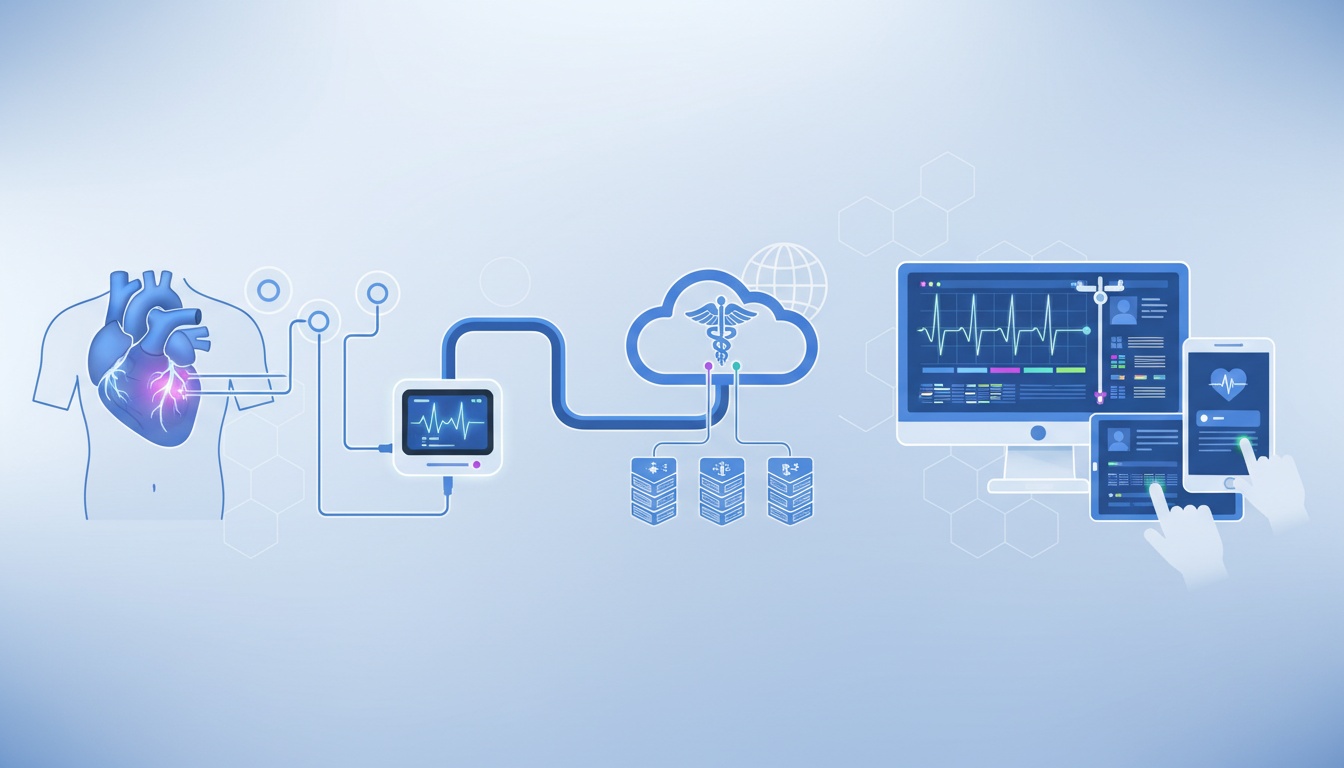
Electrocardiography (ECG) is a diagnostic tool that is widely employed in contemporary healthcare and which is essential in identifying cardiac abnormalities, patient conditions, as well as informing patients on their treatment decisions. ECG systems produce huge amounts of waveform data used in emergency departments to outpatient cardiology clinics and need to be captured, stored, interpreted, and shared effectively.
Nevertheless, conventional ECG processes tend to be based on disjointed systems, paper and pencil processing, and poor access to them. Such inefficiencies may slow down diagnosis, diminish cooperation, and add more tasks to the work of healthcare providers that may be particularly burdensome during time-sensitive cardiac cases like arrhythmia recognition or acute myocardial episode.
With the shift of the healthcare systems to digitalization, interoperability, and remote administration of care, cloud-based Picture Archiving and Communication Systems (PACS) are becoming a potent tool to facilitate ECG workflow management. Cloud PACS provides more rapid decision-making, enhanced teamwork, and enhanced patient outcomes throughout the care continuum by incorporating ECG data into a scalable, accessible and centralized infrastructure.
• Cloud Pacs Unites Ecg Data And Removes The Workflow Fragmentation.
• Urgent Diagnosis And Better Patient Outcomes Can Be Achieved Through Real-time Access.
• The Continuity Of Care Is Guaranteed By Integration With Ehr Systems.
• Telecardiology And Multi-location Cooperation Is Supported By Remote Access.
• Scalable Cloud Infrastructure Saves Money And Helps In Future Expansions.
Cloud-based PACS streamlines the ECG workflow by concentrating the waveform data storage, allowing real-time access remotely, automating the distribution of data, and seamlessly integrating with the clinical systems (EHR and RIS). This minimizes the use of manuals, shortens the time taken to make a diagnosis, and allows cardiologists and clinicians to work effectively at different locations.
Before exploring optimization, it is important to understand the limitations of conventional ECG workflows and how they impact clinical efficiency.
In conventional settings, ECG machines are usually isolated machines. The data is stored locally or is transferred manually using USB drives, printed reports or disconnected systems. This results in disjointed data silos where clinicians can hardly get the entire cardiac history of a patient when required.
Another critical limitation is accessibility. The ECG data is usually confined to particular workstations in a facility, which does not allow distant consultation. Delays in ECG readings may have a direct impact on patient outcome in urgent cardiac cases, e.g., suspected arrhythmias or myocardial infarction.
Paper-based operations also complicate operations. Printing, scanning, uploading, and manual attaching reports to patient records are time-consuming tasks, which cause possible errors. Such inefficiencies add more work pressure to the healthcare staff and minimize productivity.
There are also issues with security and compliance. In a decentralized system, it is more difficult to implement a consistent access control, an audit trail, and compliance with the regulation, e.g., HIPAA or GDPR.
The following is a systematic comparison of the way cloud PACS enhances the efficiency of ECG workflow.
| Aspect | Traditional ECG Workflow | Cloud-Based PACS Workflow |
| Data Storage | Local machines or fragmented systems | Centralized cloud storage |
| Accessibility | Limited to on-site systems | Remote, web-based access |
| Data Sharing | Manual transfer or physical copies | Instant digital sharing |
| Workflow Speed | Slower, manual processes | Automated and streamlined |
| Collaboration | Restricted to local teams | Multi-location collaboration |
| Scalability | Limited by hardware | Highly scalable infrastructure |
| Security | Variable, system-dependent | Advanced cloud security protocols |
Cloud PACS is not just another digitization of ECG data, but it reorganizes the whole process of acquiring and diagnosing ECGs to allow a smooth and effective clinical pipeline.
ECG systems record high-resolution waveform data when performing patient examination. In contemporary installations such devices produce digital outputs that can be processed and sent instantly.
Cloud PACS embraces DICOM waveform standards, which enable ECG data to be translated into a standardized format.This will guarantee interoperability among various systems and allow ECG data to be archived with imaging studies.
The ECG data that is captured is sent safely to the cloud through encrypted communication protocols. This avoids manual transfer modes and makes data to be intact during transmission.
After being in the cloud, ECG data becomes available in a central repository, and it is indexed according to patient identifiers, timestamps, and metadata. This enables clinicians to access current and past ECG records within a short period of time.
ECG data is also available to clinicians and cardiologists via web-based viewers anywhere. This aids distance diagnosis, second opinions, and consultative decision-making among healthcare teams.
ECG interpretations are incorporated in Electronic Health Records (EHR) so that a single patient profile is provided. This enhances continuity of care and enables clinicians to match ECG results with other diagnostic information.
 - Created by PostDICOM.jpg)
Cloud PACS provides almost real-time access to ECG data, which can be interpreted by clinicians in real-time. This is especially important in emergency cardiac care where quick identification may save a life.
The remote access to ECG data will assist cardiologists in the telemedicine programs and decrease patient transfers. This increases the reach to treatment of specialized cardiac care, particularly in underserved areas.
Thanks to simultaneous access to ECG data by multiple healthcare providers, a coordinated decision-making process can be achieved between emergency physicians, cardiologists, and primary care providers.
Cloud PACS solutions use advanced security mechanisms including encryption, role-based access control and audit logging. These features will make the system compliant with healthcare regulations and safeguard patient confidential information.
Cloud infrastructure removes the necessity to purchase costly on-premise hardware and enables healthcare organizations to increase storage and processing capacity on demand.
| Feature | Clinical Impact |
| Centralized ECG Repository | Enables longitudinal patient history tracking |
| Real-Time Access | Reduces diagnostic delays in critical cases |
| Remote Viewing | Supports telecardiology and specialist consultation |
| Automated Data Integration | Minimizes manual errors and administrative workload |
| Secure Cloud Infrastructure | Ensures compliance and patient data protection |
| Scalable Storage | Supports growing ECG data volumes without infrastructure limits |
 - Created by PostDICOM.jpg)
In order to grasp the concept of workflow optimization completely, one should take a closer look at the technical architecture that underpins cloud-based ECG systems.
ECG data is translated into DICOM waveform format which can be stored, indexed and accessed just like imaging studies. This would provide a single diagnostic space in which clinicians may be able to match cardiac signals with imaging results.
Cloud PACS supports EHR systems via HL7 and FHIR protocols and allows the automatic synchronization of patient data. This will remove the repetition of data entry and promotes uniformity among systems.
Current cloud PACS systems can be configured to do real-time streaming and batch data ingestion. Emergency cases require the use of real-time processing, whereas large-scale system-to-system data synchronization is achieved through the use of batch processing.
The APIs allow effortless connection to third-party applications, such as ECG management systems, analytics, and AI-driven diagnostic platforms.
Vendor-neutral approach means that the data on the ECG can be maintained regardless of the manufacturer to which the device belongs. This keeps off vendor lock-in and enables scalability in the long term.
Though cloud PACS has major benefits, the implementation must be done with proper planning in terms of system integration and performance. To prevent the fragmentation of data, healthcare organizations should perform a seamless connectivity of ECG devices, PACS, and EHR systems. Another significant aspect is latency, especially in emergency situations when it is important to access real-time data. The contemporary cloud architectures will solve this by means of streamlined data streaming and decentralized infrastructure that will enable quick and dependable access to ECG data without impairing performance.
 - Created by PostDICOM.jpg)
Rapid interpretation of ECG is essential in emergency scenarios to diagnose acute cardiac conditions like myocardial infarction or life-threatening arrhythmias. Under the cloud PACS, ECG information is immediately available to emergency doctors and cardiologists, even interdepartmentally. This will remove the time delays that are created by manual systems and will enable quicker clinical decisions. Consequently, hospitals will be able to save a considerable amount of time-to-treatment and enhance patient survival rates.
The cardiology clinics have a large number of ECG tests per day, which may need to be compared with the past records of the patients. Cloud PACS allows to store and retrieve historical ECG data centrally and retrieve it in a short period of time, providing cardiologists with the opportunity to conduct longitudinal analysis more effectively. This not only enhances accuracy of diagnoses but also saves time spent on seeking records, and this leads to an improved workflow and patient care.
Remote ECG monitoring has become important with the emergence of telehealth. Cloud PACS enables clinicians to retrieve patient ECG information anywhere, which allows them to monitor patients with chronic cardiac problems. This enables the prompt identification of anomalies and makes healthcare more proactive and accessible because of the necessity to visit patients regularly.
Multifaceted healthcare organizations are faced with data fragmentation systems. Cloud PACS centralizes ECG data into one platform, which can be accessed in all locations with the same degree of consistency. This will create better coordination of teams, minimize duplication of tests, and increase continuity of care in general.
ECG processes are directly related to patient outcomes, especially in acute heart diseases. Delays in the interpretation of ECG may result in a missed or delayed diagnosis of critical conditions, including arrhythmias, ischemic events, or myocardial infarction. Even a couple of minutes of difference in emergency departments when accessing ECG data can have a crucial influence on the choices of treatment and the survival rates of patients.
Cloud PACS can help to shorten these delays by allowing real-time access to ECG data between departments and locations. Clinicians do not have to wait till a manual transfer occurs or use isolated systems. They can instead access the ECG records of patients instantly, compare the present and past waveforms and make evidence-based decisions at a faster rate.
Another major advantage is longitudinal ECG analysis. By storing data in a central location, clinicians are able to monitor the alterations in the cardiac activity of a patient over time, a process necessary to the treatment of chronic heart diseases and the identification of insidious abnormalities that would otherwise escape the notice of a single ECG test.
Moreover, there are cloud-based workflows that are supportive of early intervention strategies. Remote access and continuous monitoring enable healthcare professionals to detect indicators of risk at an earlier stage and take positive steps, minimizing the likelihood of critical cardiac events.
Cloud PACS directly leads to improved patient outcomes, clinical accuracy, and faster diagnosis in cardiac care by reducing workflow friction and enhancing accessibility.
Implementing cloud PACS is not merely a technological enhancement- it is a business move towards effective operations and patient care.
Patients gain access to lower administrative load, better diagnosis, and increased collaboration. Along with that, the cloud infrastructure prepares organizations to further developments like AI-based ECG analysis and predictive cardiac diagnostics.
Cloud PACS is becoming a backbone to current cardiac workflow with the continued development of data-driven and remote care models in healthcare.
There are a few critical factors that should be considered by healthcare providers before they adopt cloud PACS to optimize ECG workflow. The infrastructure must be ready in terms of reliability of the network and bandwidth to facilitate transmission of real-time data. The integration capabilities should also be evaluated to guarantee compatibility with the current ECG devices, EHR systems, and clinical workflows.
Another important factor is data migration between legacy systems. To ensure continuity of care, organizations must strategize on how the historical ECG data will be transferred and organized in the new system.
The other critical success factors are training and change management. New workflows should be learned by clinical and administrative personnel to ensure the maximum benefits of cloud PACS.
By pro-actively covering these factors, healthcare providers will be able to make the transition process as smooth as possible and get the best out of cloud-based ECG workflow optimization.
PACS stores, administers and disseminates ECG waveform data, and allows access and analysis to be efficient.
Yes, DICOM standards of interoperability mean that data can be kept in ECG form.
It allows web based access remote access anywhere.
It does, yes, use encryption, access controls and audit logs.
Yes, through HL7 and FHIR protocols.
It allows remote diagnosis and constant monitoring of the patient.
The complexity of migration is based on the availability of infrastructure, although current cloud PACS solutions offer integration tools and support in the process of transition to new infrastructure.
Yes, it lowers the cost of hardware and maintenance as well as provides scalable solutions.
Yes, cloud services can be linked to AI applications to improve the accuracy of diagnosis and predictive analytics.
|
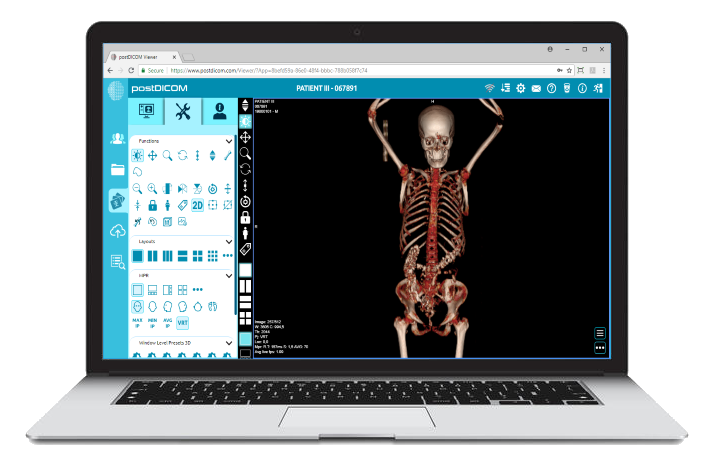
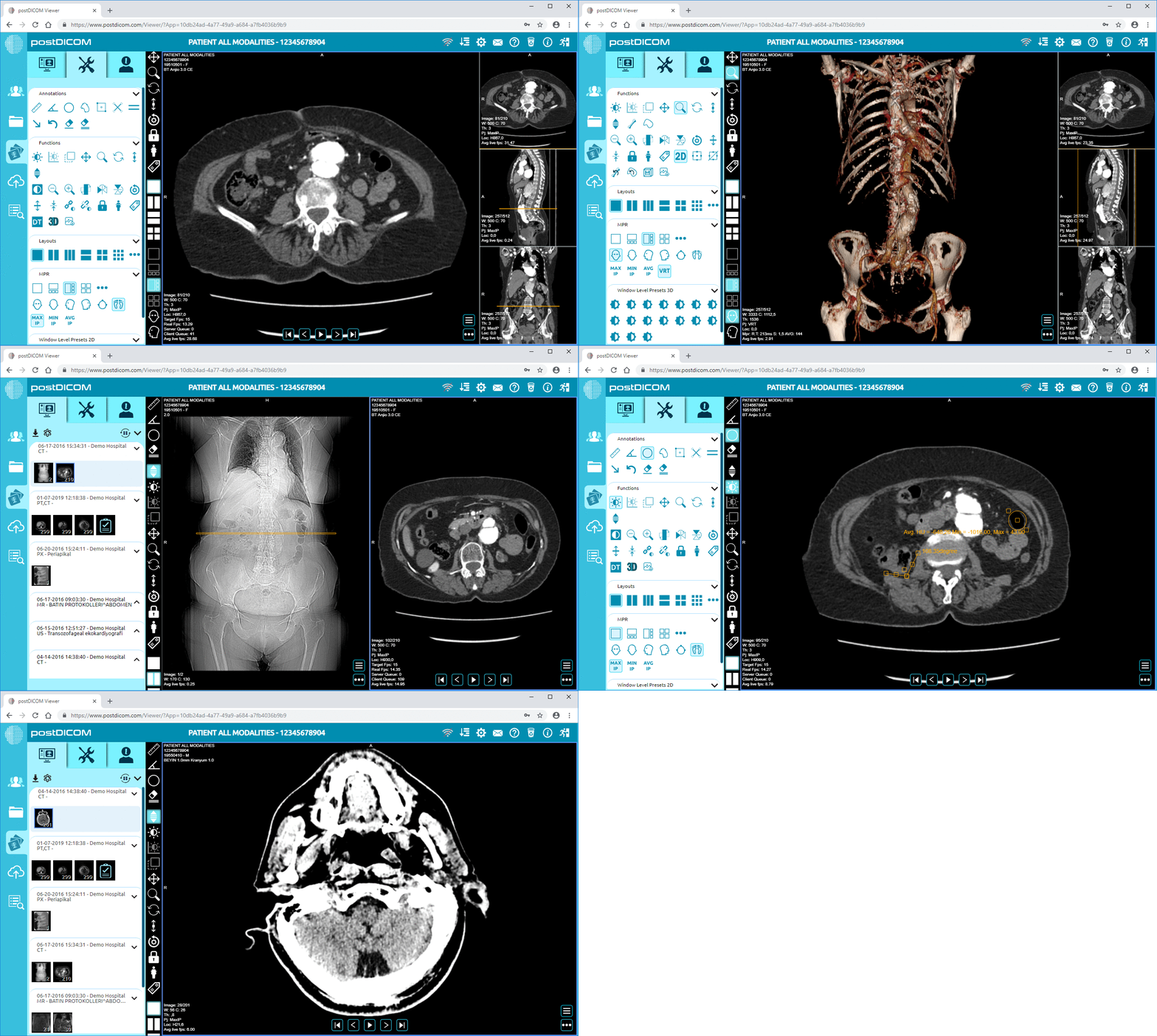
Cloud PACS and Online DICOM ViewerUpload DICOM images and clinical documents to PostDICOM servers. Store, view, collaborate, and share your medical imaging files. |

